

Project Brief
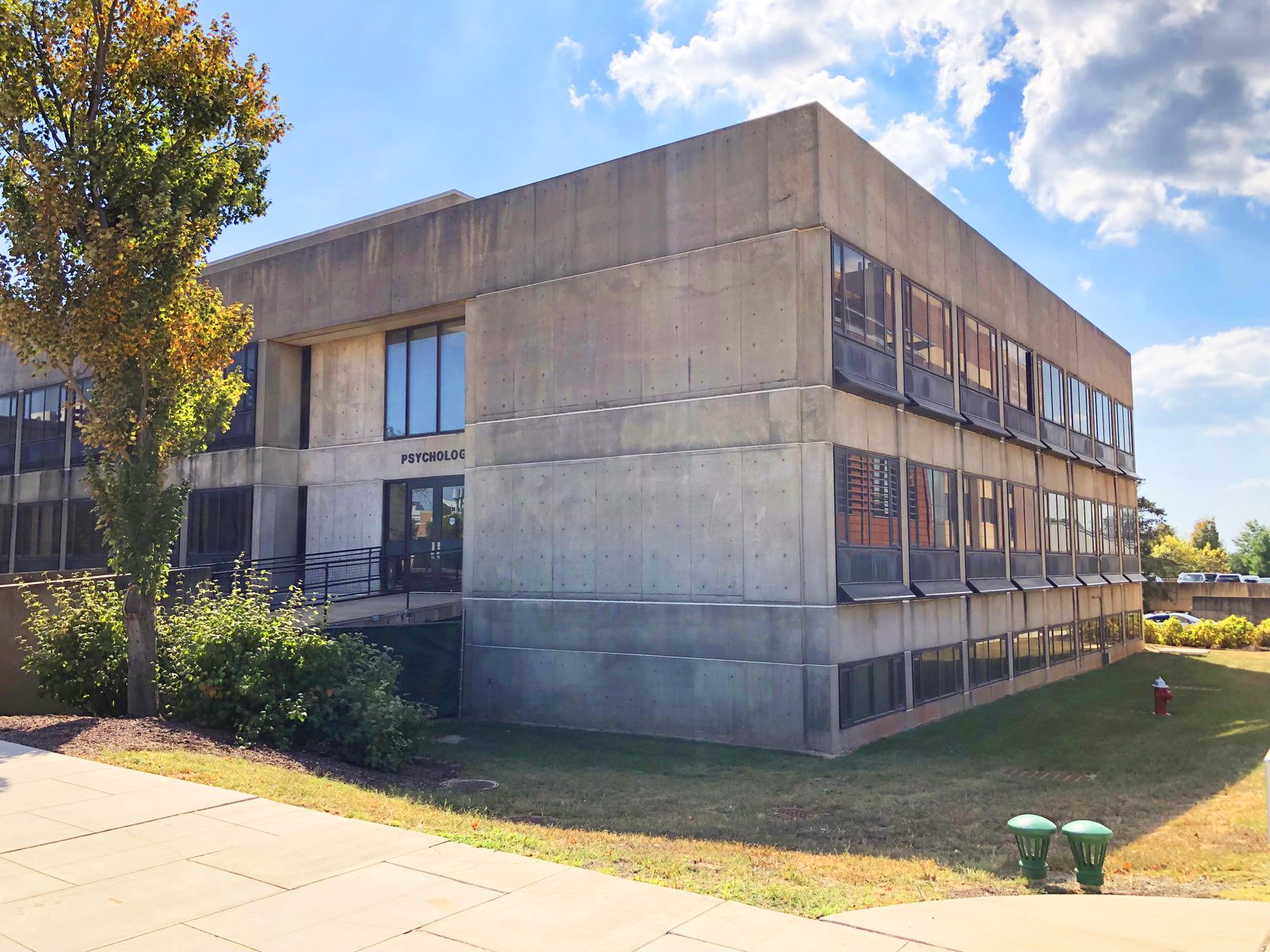
The Psychology Building at 152 Frelinghuysen Road on the Busch Campus is the home of the Rutgers Department of Psychology, whose research includes behavioral and systems neuroscience, and part of the building is animal laboratory space.
Two air handling units serve that space, and humidity had been delivered by roughly forty small humidifiers set in the branch ducts, one per zone. None had been operational for a long time. KeRi was engaged as prime professional under the university's on-call consultant contract, designing to the Rutgers University Design Standards, and confirmed with the user group that area humidity control would meet their requirements.
The design abandons the branch duct units and puts one common steam humidifier in the main supply duct of each air handler, in the penthouse mechanical room where they can be reached for service. Making room for them meant relocating the existing sound traps and reworking ductwork around them. Steam comes from the existing risers and their high temperature hot water to steam generator, verified for capacity, with an alternate design for a gas fired steam generator in the penthouse. New DDC controls run the humidifiers from a duct mounted sensor on each unit.
MEP Engineering Scope

What We Engineered
Humidification upgrade for the animal laboratory space:
- Survey and HVAC load calculations to size the replacement humidifiers
- Roughly forty branch duct humidifiers abandoned, replaced by one common unit per air handler
- New duct mounted steam humidifiers in the penthouse mechanical room, where they can be serviced
- Existing sound traps relocated and ductwork modified to make room
- Existing steam risers and steam generator verified and reused, with penthouse piping as required
- Alternate design for a gas fired steam generator in the penthouse
- DDC controls with a duct mounted humidity sensor for each air handling unit
- Electrical power, and plumbing make-up water and gas as required
Systems by Discipline
01Mechanical
- HVAC load calculations for the spaces served by air handling units AHU-1 and AHU-2
- One common duct mounted steam humidifier in the main supply duct of each air handler, replacing roughly forty branch duct units that are abandoned in place
- Humidifiers located in the penthouse mechanical room, reachable for service
- Existing sound traps removed and relocated, with ductwork modified around the new humidifiers
- Existing steam risers and the high temperature hot water to steam generator verified for capacity and reused, with new piping in the penthouse
- Demolition drawings for the ductwork and piping being removed
- Alternate design for a natural gas fired steam generator producing steam locally in the penthouse
02Controls, Electrical & Plumbing
- New DDC controls for the humidifiers, with a duct mounted humidity sensor for each air handling unit
- Area humidity control confirmed with the user group, with space temperature still handled by the existing local reheat and thermostats
- Power for the new humidification equipment
- Make-up water, and gas piping where the alternate generator is carried
The Challenge
Humidity in the animal laboratory space depended on roughly forty humidifiers scattered through the branch ducts, and none of them still worked. Replacing them one for one would have rebuilt the same maintenance problem, and the penthouse had no clear space for central units because the sound traps were in the way.
Our Solution
KeRi confirmed with the user group that area humidity control met their needs, then designed one common steam humidifier in the main supply duct of each air handler, placed in the penthouse where they can be serviced, with the sound traps relocated and the ductwork reworked to suit. The existing steam risers and generator were verified and reused, an alternate carried a gas fired generator in the penthouse, and new DDC controls run each humidifier from its own duct mounted sensor.
Previous Project Rutgers Nelson Vivarium Next Project Rutgers Livingston Center