

Project Brief
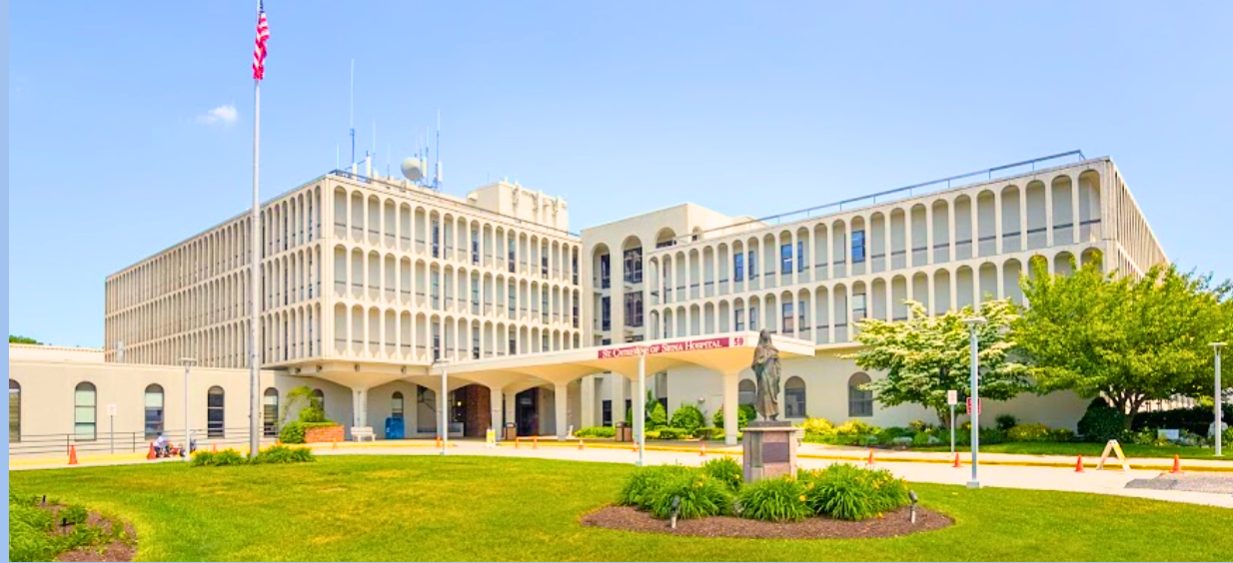
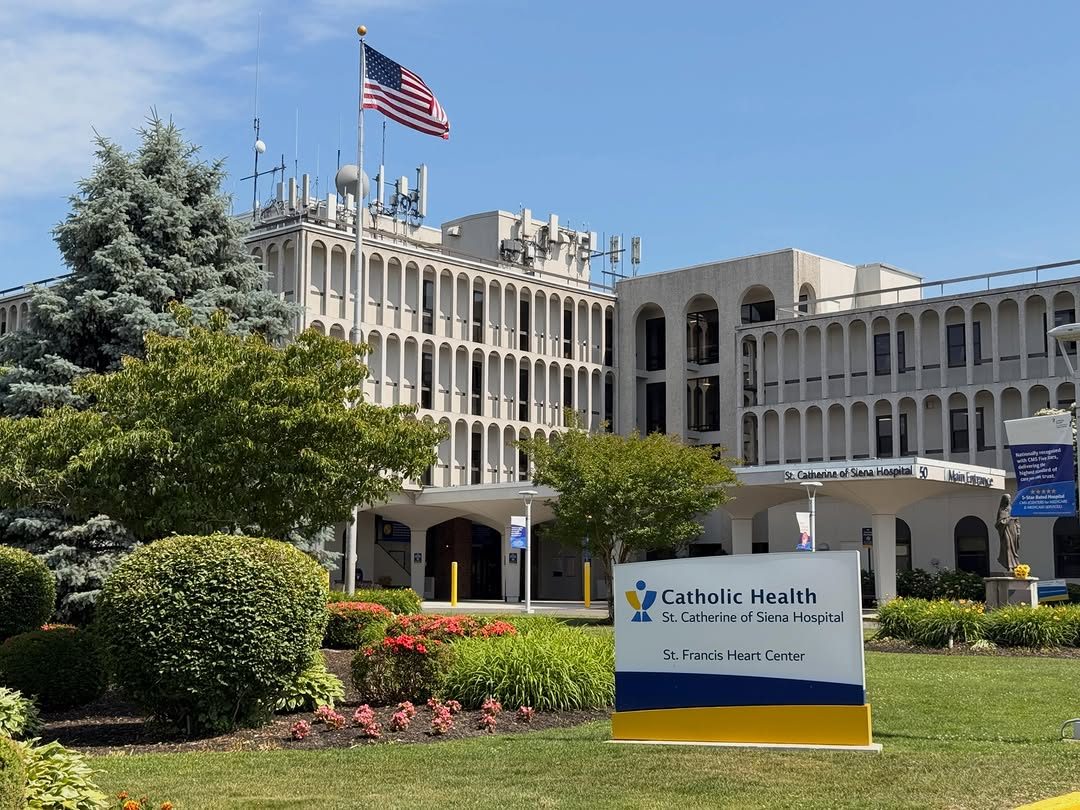
KeRi Engineering served as Engineer of Record for the replacement of the air handling unit and VAV boxes serving the operating rooms at St. Catherine of Siena Hospital. The existing Governair custom unit dated from 1995 and was 29 years old at design: constant volume, 19,000 CFM supply and 9,130 CFM return, a 50 HP fan on variable inlet vanes, and a chilled water coil needing 254 GPM to make its 1,222 MBH. It served operating rooms 3, 4, 5 and 8 and two delivery rooms with no redundancy, a single point of failure the owner valued at as much as $1,000,000 a day in lost revenue. A 2019 retro-commissioning had recorded it running more than 20 percent above design airflow while its coil received 125 GPM against that 254 GPM design, and staff reported the ORs losing humidity control on cool, humid mornings.
The replacement is a Trane Performance Climate Changer, an outdoor variable-volume unit delivering 25,000 CFM supply at 4.87 inches of water column and 10,560 CFM return, shipped in four sections at 18,159 pounds installed. Its eight-row chilled water coil is rated 1,597 MBH total and 1,010 MBH sensible, taking entering air from 84.9 degrees dry bulb and 69.5 wet bulb down to 48.3 degrees on 42 and 57 degree water at 212 GPM. The wider water range is the point: the coil delivers 31 percent more cooling than the original while asking the plant for 42 GPM less than a unit that was never receiving its design flow. Air is filtered MERV 8 and MERV 14, coil casings and drain pans are stainless steel, a one-row steam preheat coil rated 1,220 MBH carries the unit from 20 to 65 degrees, and control is a factory-programmed unit-mounted controller on a 65 kA rated assembly.
KeRi provided mechanical, electrical, plumbing and structural engineering across a 60, 90 and 100 percent issued-for-bid sequence, including a constructability workshop walked in the field. A mechanical vestibule houses a clean steam generator for OR humidification and a steam-to-hot-water heat exchanger rated 291.8 MBH at 30 GPM and 180 to 200 degrees for the new VAV reheat coils, and every VAV box serving the operating rooms was replaced. Structural calculations covered new steel dunnage and roof railing for the crane-set unit, and the documents carried new power, smoke dampers and duct smoke detectors tied into the existing fire alarm system. Design ran from award in August 2024 to issued-for-bid in October 2024, with KeRi continuing through bidding and construction administration.
MEP Engineering Scope
What We Engineered
MEP and structural engineering of record for the OR air-handling replacement:
- Field survey of existing conditions and confirmation of applicable codes with the Authority Having Jurisdiction
- New 25,000 CFM outdoor variable-volume AHU with MERV 8 and MERV 14 filtration and stainless coil casings and drain pans
- Eight-row chilled water coil at 1,597 MBH on 42 and 57 degree water, cutting required flow to 212 GPM
- Mechanical vestibule with clean steam generator for OR humidification and a steam-to-hot-water heat exchanger for VAV reheat
- Replacement of every VAV box serving the operating rooms
- Structural design of new steel dunnage and roof railing for the crane-set unit
- Electrical power, conduit and breakers, plus smoke dampers and duct smoke detectors integrated into the existing fire alarm system
- Construction phasing so the operating rooms stay in service, with permit, bid and construction-administration documents
The Challenge
The unit being replaced was the only air handler serving four operating rooms and two delivery rooms, in a hospital where cases run on weekdays and rooms are not taken out of service lightly. It had reached the end of its life, ran above its design airflow, never received the chilled water flow its coil was selected for, and could not hold humidity in the ORs on mild humid mornings. Any design had to work within an existing 1995 installation: existing supply and return ductwork that would be cleaned and sealed rather than replaced, piping demolished only back to the nearest isolation valve, pneumatic and DDC controls pulled back to their panels, and a building structure that had to be verified for a larger unit set by crane.
Our Solution
KeRi sized the new unit for what the operating rooms actually need rather than replacing the 1995 machine in kind, moving it to variable volume at 25,000 CFM and selecting the cooling coil on a wider chilled water temperature range so the plant is asked for less flow, not more, and the unit has real dehumidification capability. The clean steam generator and heat exchanger were placed in a mechanical vestibule at the unit so humidification and VAV reheat are served locally. Structural, electrical and fire alarm work was coordinated into the same document set for permit and bid, and the drawings delineated phased installation, including provision for a temporary air handling unit during construction, so the operating rooms could remain available through the changeover.
Previous Project NYC SCA COVID Ventilation Next Project Matheny Children's Hospital