

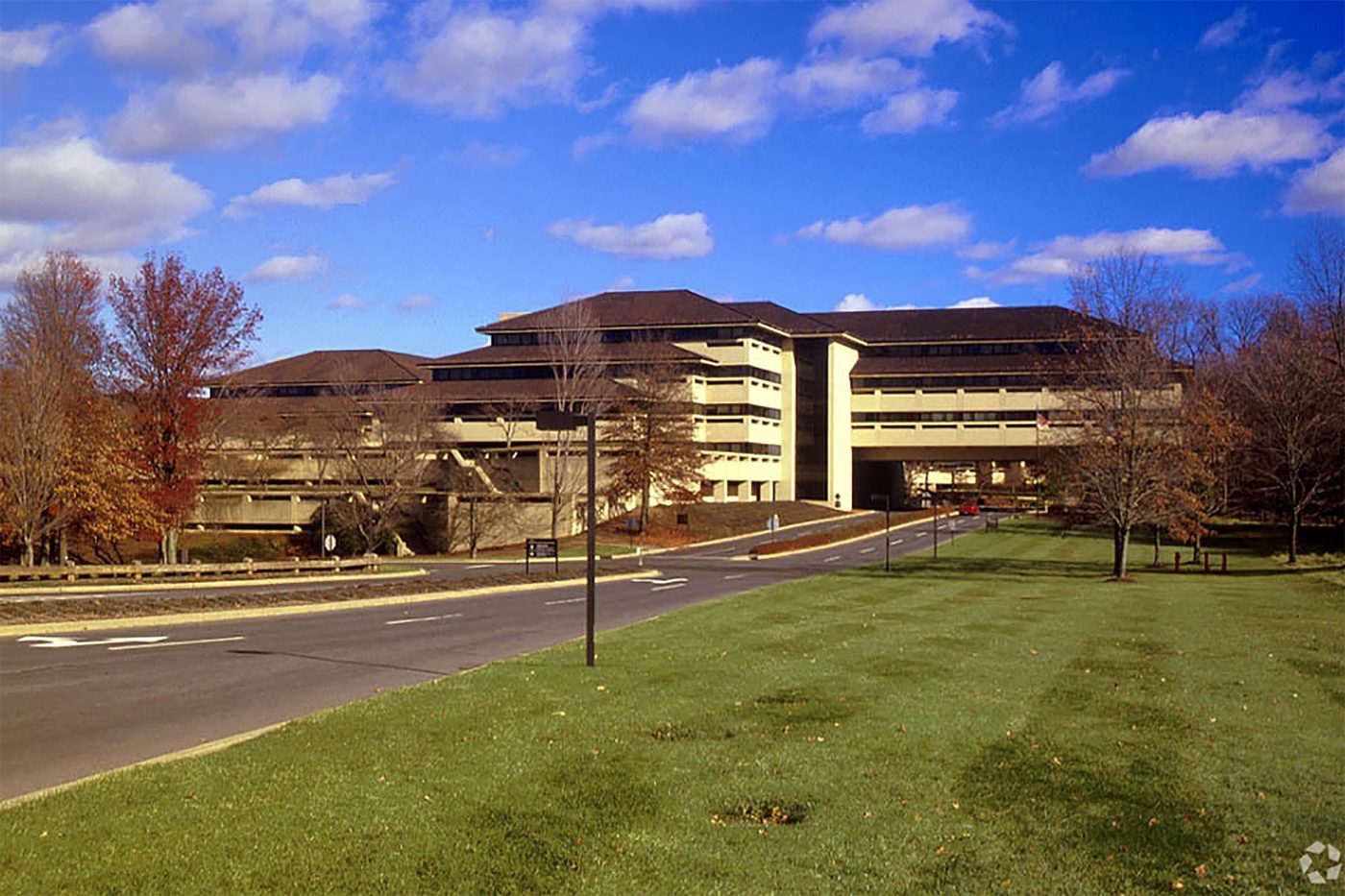
Project Brief
One room at Verizon's Basking Ridge campus holds the 13.2 kV main electrical switchgear that feeds the whole site, including the critical network space. Switchgear generates heat and does not tolerate it, so the cooling on that room is not a comfort system. KeRi was prime consultant for replacing it.
The design puts in two floor-mounted Liebert precision units, each moving 5,200 CFM and rated 117 MBH total and 102 MBH sensible, paired with two air-cooled condensers at grade rejecting 161.1 MBH each at a 95 degree ambient. They are sized so either one can hold the room on its own, which is the whole point: one unit can be down for service or fail outright and the switchgear stays within temperature. Each unit carries a high-efficiency EC plenum fan, a condensate pump, 4 inch MERV 8 filters, and an integral smoke detector, and interfaces to the existing control system with the new thermostat integrated into the campus Siemens building management system.
Getting outside air into the room meant building work. A 250 CFM inline fan draws ventilation air through a new waterproof sleeve cut in the exterior wall, with a backdraft damper, insect screen, and birdscreen, and one window glazing panel was replaced with a solid 2 inch insulated waterproof panel to take it. While the crew was at the windows, the exterior caulking was stripped and every window across the switchgear room, maintenance shop, and storage room re-caulked inside and out. Outside, the condensers sit on piered footings with seismic bracing, condensate is pumped to new gravel dry wells, and the planting was cut back at least 3 feet around each unit.
On the electrical side the units are fed from a new 150 amp panel off a new breaker in the existing switchboard, with weatherproof fused disconnects outdoors, vapor-tight LED lighting, and a weatherproof GFCI receptacle. The room itself set the rules for how the work could proceed: any shutdown needed a minimum 72 hours notice to Verizon, and every worker entering had to have safety training and arc flash protection. KeRi issued the set for bid in January 2020 and for permit that May.
MEP Engineering Scope
What We Engineered
Mechanical and electrical design for the switchgear room:
- Two 10-ton Liebert precision units with matching condensers at grade
- Redundancy sized so either unit can hold the room alone
- 250 CFM ventilation air through a new exterior wall sleeve
- New 150 amp panel, disconnects, lighting, and receptacles
- Thermostat integrated into the campus Siemens BMS
- Condenser footings, seismic bracing, dry wells, and window re-caulking
Systems by Discipline
01Cooling
- Two floor-mounted Liebert precision units, 5,200 CFM and 117 MBH total capacity each, sized so either one can hold the room on its own
- Two matching air-cooled condensers at grade, 10 tons and 161.1 MBH each, rated at a 95 degree ambient
- High-efficiency EC plenum fans, condensate drain pumps, 4 inch MERV 8 filtration, and integral smoke detection in each unit
- New supply ductwork and registers, with the existing supply registers removed and their duct openings capped in sheet metal
- Duct smoke detectors in the return plenum
02Ventilation & Building Work
- A 250 CFM inline supply air fan bringing outside air to the room, on spring isolated hangers with a speed controller
- New waterproof wall sleeve, backdraft damper, insect screen, and birdscreen, with the duct terminated low near the unit return
- One window glazing panel replaced with a solid 2 inch insulated waterproof panel to take the new intake
- Exterior caulking removed and every window re-caulked across the switchgear room, maintenance shop, and storage room, inside and out
- Condensate pumped to new gravel dry wells, with piered concrete footings and seismic bracing under the condensers
- Vegetation cleared at least 3 feet around each condenser and the ground finished in landscape fabric and stone
03Electrical
- New 150 amp panel fed from a new 150 amp breaker in the existing switchboard, alongside the room's existing 225 kVA transformer
- Fused disconnects at each unit, in weatherproof enclosures where they sit outdoors
- Vapor-tight gasketed LED lighting with toggle switching, and a weatherproof GFCI receptacle with an in-use cover
- Feeder sizing carried on a single line diagram issued with the set
04Controls & Working Around Live Gear
- Unit controllers interfaced to the existing control system, with the new thermostat integrated into the campus Siemens building management system
- Existing conditions verified before any work started, and existing exhaust fans left in service
- A minimum 72 hours notice to Verizon for any work requiring a shutdown
- Arc flash protection and documented safety training required for every worker entering the room
- Issued for bid January 2020, then revision 1, a bulletin, and issued for permit in May 2020
The Challenge
The room carries the 13.2 kV switchgear that feeds the entire campus and the critical network space behind it, so the cooling on it cannot be allowed to fail and the room itself cannot casually be worked in. Any shutdown needed 72 hours notice, everyone entering needed arc flash protection and safety training, and the room had no good way to bring in outside air.
Our Solution
KeRi designed the cooling around redundancy: two Liebert precision units each able to hold the room alone, with matching air-cooled condensers at grade on piered and braced footings, so one can be serviced or lost without consequence. Ventilation air comes through a new sleeve and damper cut into the exterior wall behind a replaced glazing panel, the units are fed from a new 150 amp panel off the existing switchboard, and the new thermostat reports into the campus Siemens building management system.
Previous Project Verizon Control Air Plant Next Project Verizon District Steam PRV