

Project Brief
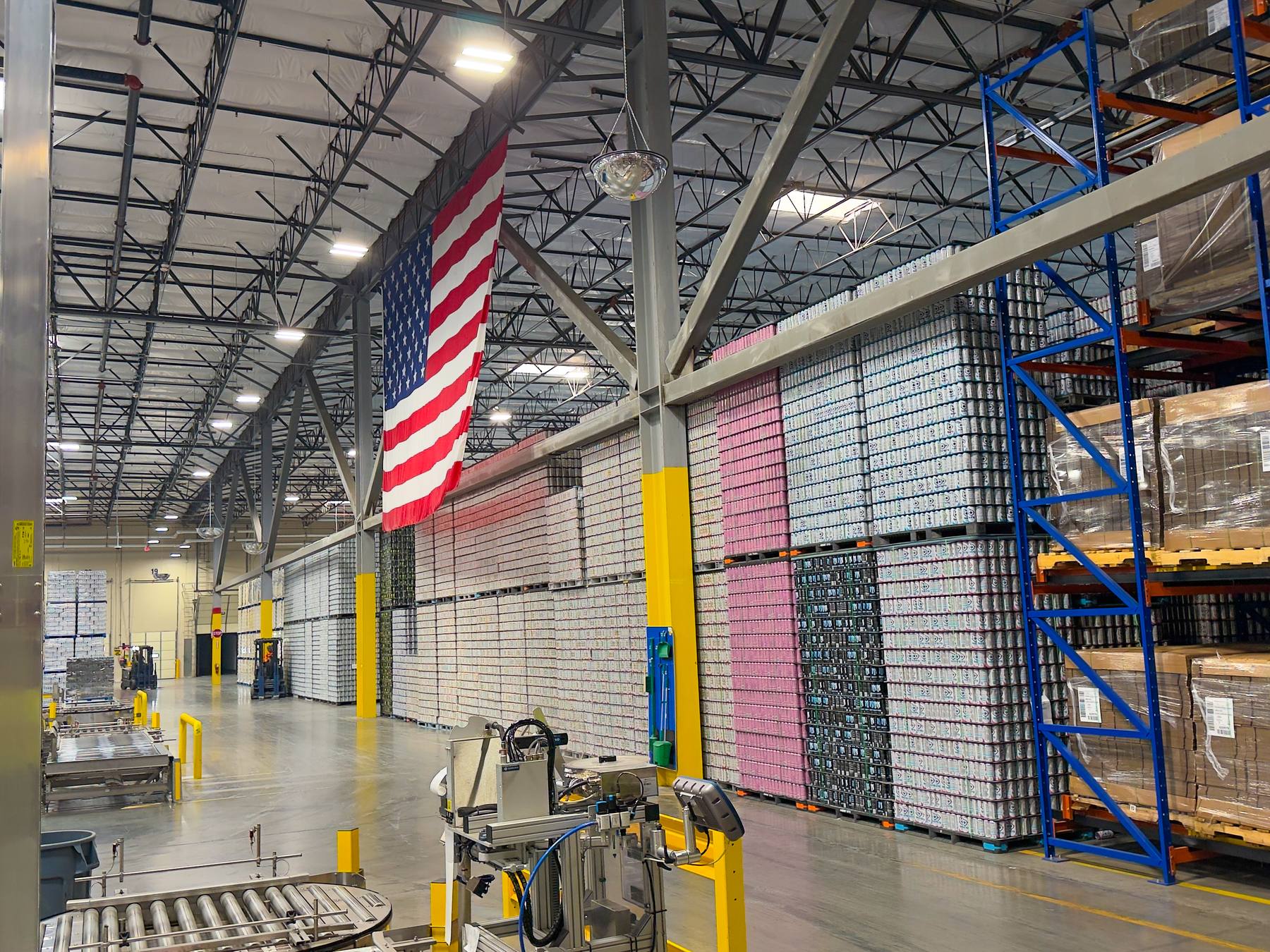
When one of the largest beverage manufacturers set out to increase capacity at an Arizona canning plant, it re-engineered the process around its largest pasteurizer yet: a dual-deck tunnel machine running 16 oz cans at 1,846 cans per minute, holding product at 160°F for ten minutes over an 80 ft, 33 minute pass. KeRi designed the utilities that pasteurizer depends on: a new 475 HP steam boiler, a 700 ton cooling tower, and the gas, condensate, condenser water, drainage and electrical work that ties them to the machine.
Designing for a pasteurizer takes more than knowing how to heat and cool water. It takes an understanding of how the product behaves and how the whole line runs, because the hard part is the loads. In balanced running, the regeneration zones hand heat from the cans going in to the cans coming out, and steam demand settles at about half of its peak. At startup, after a line stoppage, or at the end of a run, that regeneration collapses: the heating side climbs toward 16 MMBtu/hr and the cooling side toward 8 MMBtu/hr, typically for less than twenty minutes at a time. Size the plant for balanced running and it falls short on every restart. Size it for the unbalanced peak without judgment and the owner pays, in cost and in footprint, for a boiler and a tower that sit oversized most of the day.
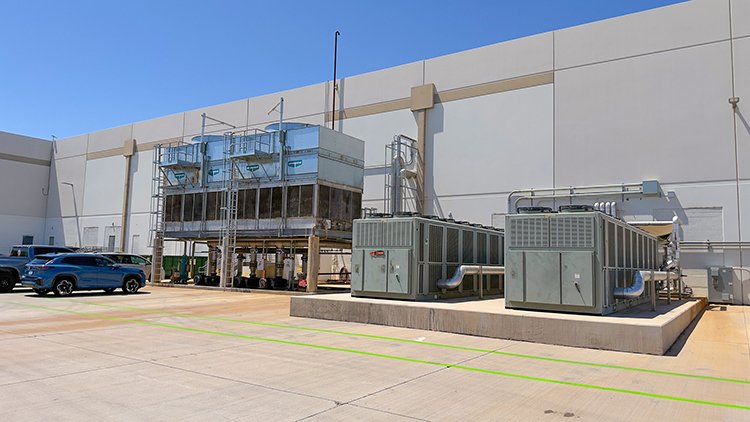
The desert climate added a second constraint. KeRi's review of the pasteurizer found the cooling side was limited by temperature rather than tonnage: at the 75.8°F design wet bulb a tower can only make water so cold, and the pasteurizer needs a margin above tower water to discharge product near 90°F. The tower was selected at 700 tons on 2,100 GPM, 90.5°F down to 80.5°F, a 30 percent margin over the 537 tons the unbalanced load calls for.
MEP Engineering Scope
What We Engineered
MEP engineering for the pasteurizer utilities:
- Utility load analysis of the new dual-deck tunnel pasteurizer in balanced and unbalanced operation, from the manufacturer's thermal model
- New 475 HP steam boiler at 100 psig with upgrades to the existing boiler, delivering 80 to 85 psig steam to the pasteurizer
- 700 ton induced-draft cooling tower at 2,100 GPM, selected at a 75.8°F design wet bulb, with basin sweep filtration
- Condenser water pumps serving the pasteurizer's cooling heat exchanger
- Electric condensate return in place of a pressure-motive system, located for access below the exchanger discharge
- High-pressure gas main upgraded from 2 inch to 3 inch for the new boiler, with the load application to the gas utility
- Manifold and trench drainage at the pasteurizer inlet and discharge, lighting and equipment power
- Construction administration, including submittal review and RFI responses
The Challenge
A pasteurizer's worst utility demand comes from instability, not steady production: a startup with no regeneration, a jam that backs cans up, a run that ends with cans leaving and none arriving. A line that stops and starts can stack those peaks. The cooling side had a second limit. In the Arizona heat the tower is constrained by how cold it can make water, not by tonnage, and on the hottest days the pasteurizer's margin above tower water closes.
Our Solution
KeRi sized the boiler and the tower from the pasteurizer's thermal model in both states, then set the margins deliberately: the tower went from the 537 tons the unbalanced load needs to 700, with throughput held near 1,850 cans per minute to fit the boiler plant. A roughly three minute control delay keeps brief stoppages from cascading into repeated load swings. And the utilities come up first: the tower is run under simulated load and the boiler proven before the pasteurizer arrives.
Previous Project Amazon Delivery Station Next Project PepsiCo Arlington