

Project Brief
KeRi Engineering has carried a leading softgel capsule producer's manufacturing expansion through a sequence of projects, from the original drying tunnels to the design of an entire new softgel manufacturing building. Taken together, the program was engineered to lift annual capacity from roughly 400 million capsules to 900 million. The work covers an expansion of drying tunnel capacity inside the existing manufacturing building, an HVAC upgrade to the encapsulation room that feeds it, and concept design through construction documents for the new facility on the same campus.
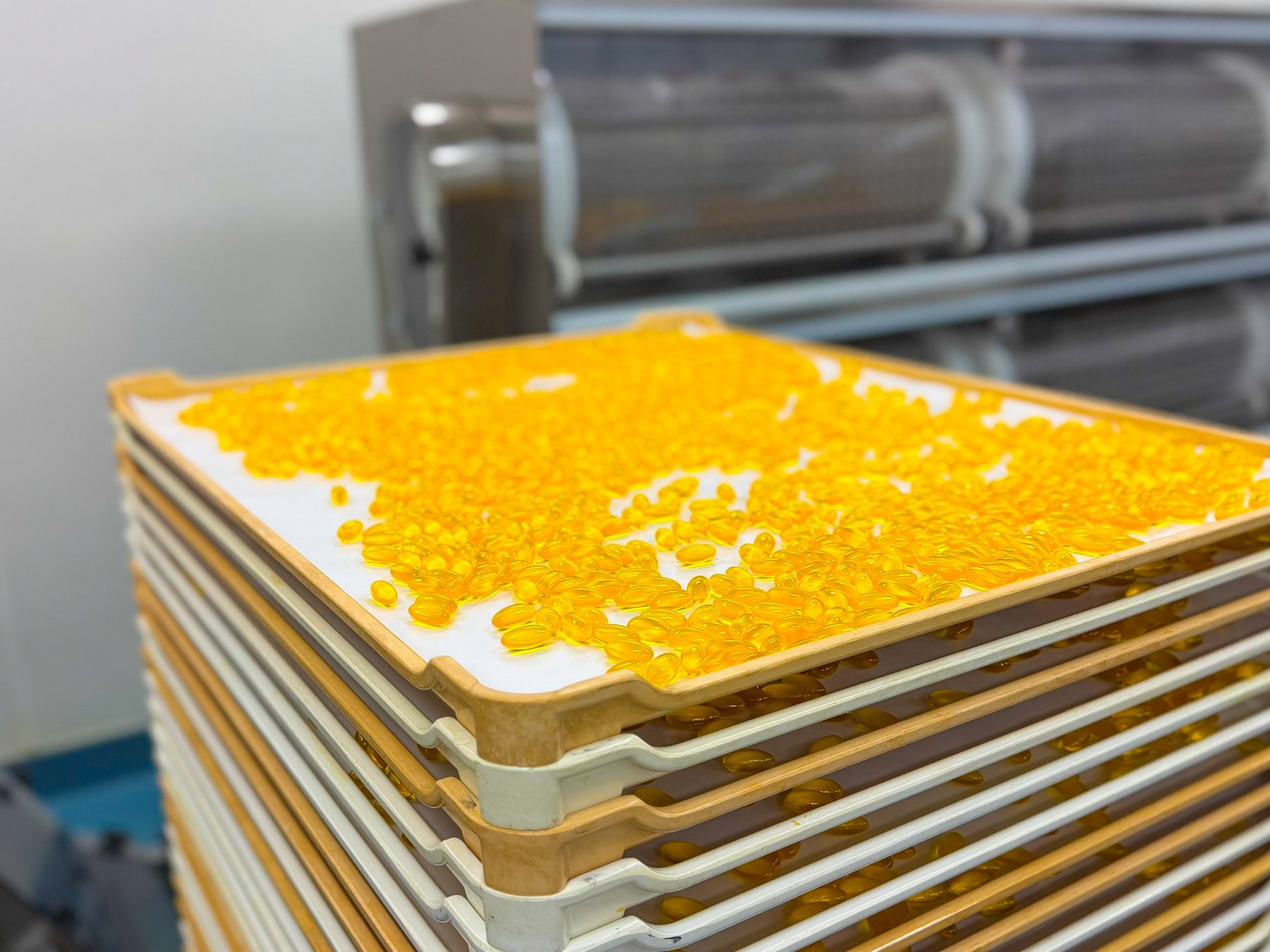
The drying tunnel is the piece the rest of the plant is built around, and it is fully custom designed rather than bought as a packaged unit. Softgel drying leaves no comfortable margin on either side. Dry the capsules too quickly and the shells turn brittle, seams crack and dissolution fails. Dry them too slowly and the capsules stay tacky, the fill becomes unstable and microbial risk rises. The usable window between those two failures is narrow, and it is specific to the client's own shell and fill formulations.
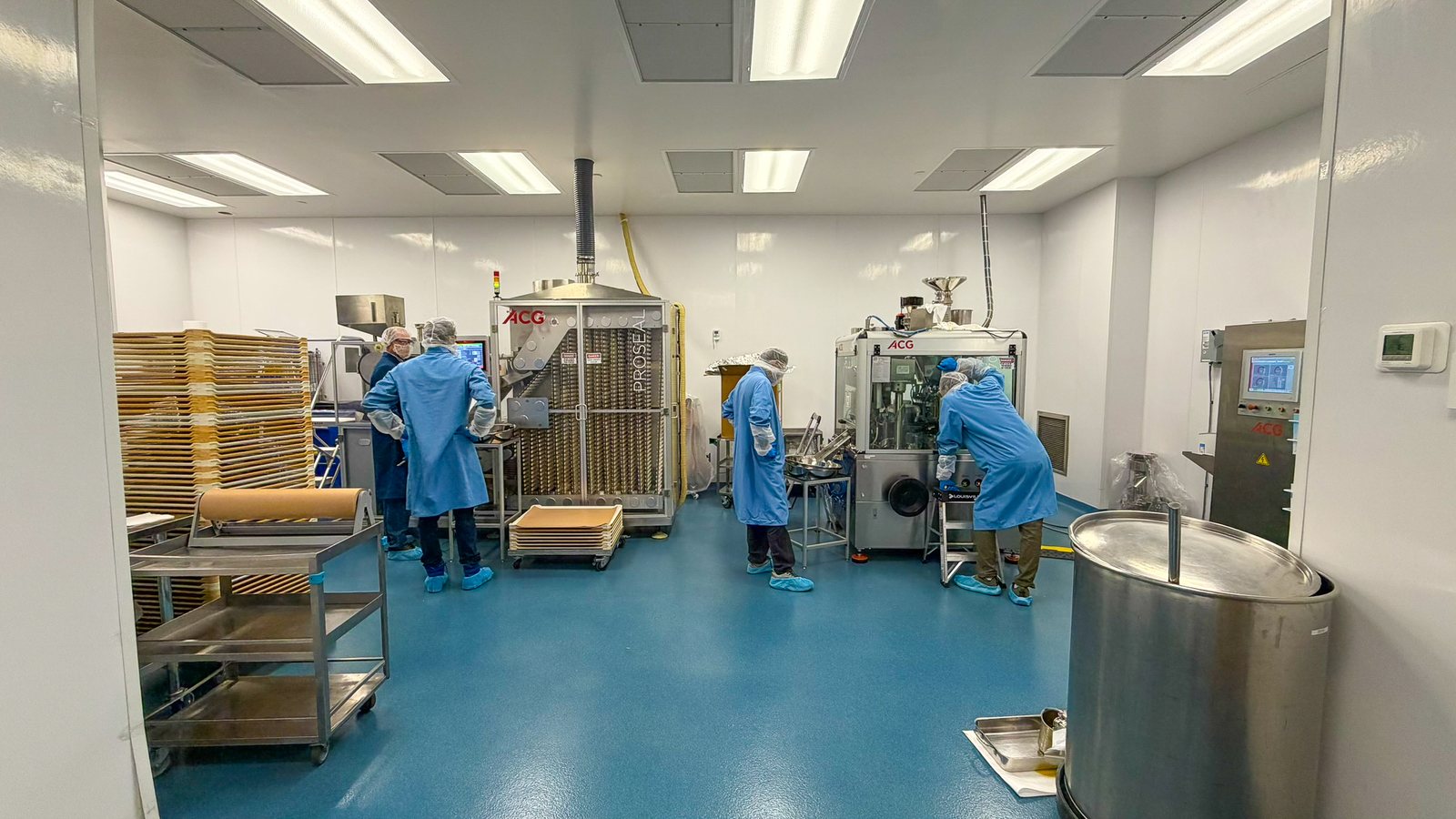
KeRi engineered the tunnel's air side to hold the client's proprietary drying profile, conditioning and staging air through the tunnel so capsules meet a controlled progression of temperature and humidity from the moment they leave encapsulation to the moment they are sorted. The encapsulation room upstream was upgraded on the same logic, because a capsule that reaches the tunnel already out of condition cannot be recovered inside it. Air handling, dehumidification and air distribution through the expanded suites and the new building were sized around the higher throughput rather than around the equipment that was already there.
MEP Engineering Scope
What We Engineered
MEP engineering across the softgel expansion program:
- Fully custom softgel drying tunnel, with the air side engineered to the client's proprietary drying profile
- Expansion of drying tunnel capacity inside the existing, operating manufacturing building
- HVAC upgrade to the encapsulation room, holding condition through gel ribbon forming and capsule set
- Concept design through construction documents for a new softgel manufacturing facility on the same campus
- Mechanical, electrical, plumbing and fire protection design for the new building and the expanded suites
- Dehumidification and air distribution sized to the increased throughput rather than to the existing equipment
- Process utilities and connections to the encapsulation, tunnel and sorting equipment
The Challenge
Capacity had to more than double without the product changing in any way. Softgel drying is where that constraint bites hardest, because the drying profile is a quality attribute rather than a throughput setting: more capsules per year could not be bought by running the tunnel hotter or faster. The expansion also had to be built into a plant that was still producing, which limited how much of the existing air and utility infrastructure could be taken out of service at any one time. And the new building had to be designed to reproduce drying behaviour that had been developed on a working line in the original building rather than derived on paper.
Our Solution
KeRi designed the tunnel around the drying profile instead of fitting the profile to a catalogue unit. Air is conditioned and staged through the tunnel so capsules pass through a controlled progression rather than a single set point, which is what lets throughput rise while the time each capsule spends in its correct condition stays intact. The encapsulation room was brought under the same control so capsules arrive at the tunnel already within range. The same approach was then carried building to building: the new facility's systems were sized and laid out to reproduce the behaviour of the proven line at the larger volume, and the work inside the existing building was staged so the operating lines kept running through construction.
Previous Project Hormonal OSD Facility Next Project Potent Compound Suite