

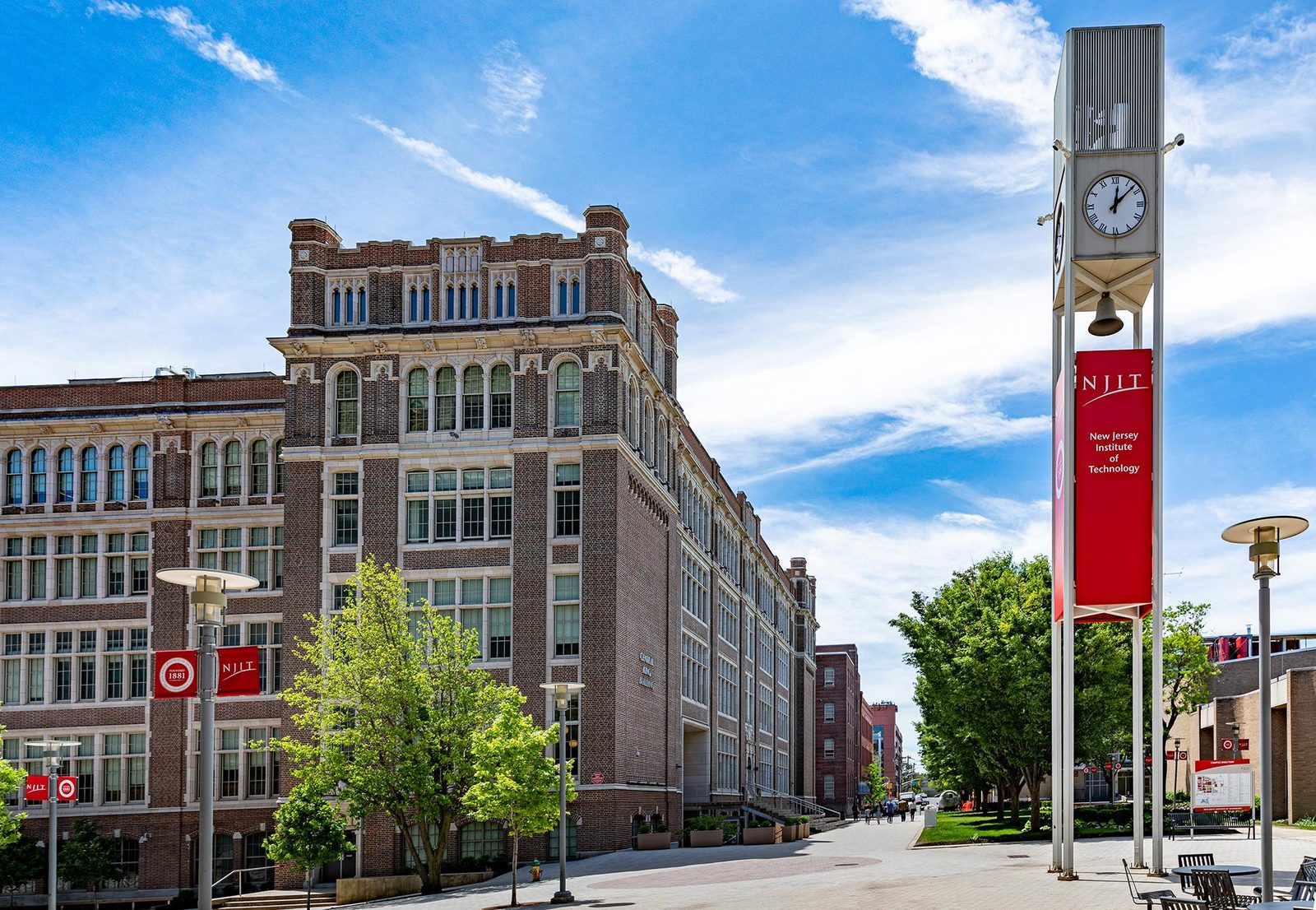
Project Brief
Under PSE&G's Clean Energy Future energy efficiency program, KeRi Engineering delivered investment-grade (ASHRAE Level 3) energy audit services across the New Jersey Institute of Technology's Newark campus: 17 buildings totaling roughly 2.02 million square feet on a 48-acre campus of 44 buildings. KeRi authored the seven-building volume of the two-part report, covering Tiernan Hall, the Council for Higher Education in Newark (CHEN) building, the Central Avenue Building, the connected Colton, Campbell, and Weston halls, VentureLink 105, the York building, and Laurel Residence Hall, and provided audit services on the ten buildings in the companion volume.
The audit followed ASHRAE's Energy Audit Guidelines for Commercial Buildings. Every major energy-consuming system was surveyed and catalogued unit by unit: centrifugal chiller plants, gas-fired hot water and high-pressure steam boilers, air handling and packaged rooftop units, cooling towers, pumps, exhaust systems, domestic hot water, and lighting. Utility records were analyzed building by building and each building's site energy use intensity was benchmarked against Energy Star Portfolio Manager, 84.3 kBtu/SF/yr for colleges and universities and 107.5 kBtu/SF/yr for residence halls. The ten buildings in the companion volume came in at a combined 86.9 kBtu/SF/yr on a baseline of 68,816 MMBtu of electricity and 62,647 MMBtu of natural gas; the seven KeRi-authored buildings ranged from 72 kBtu/SF/yr at Tiernan Hall to 229.5 at the York building.
Each building received its own prioritized list of energy conservation measures, and every measure carries an individual savings calculation, a vendor-based implementation cost, and a simple payback: LED retrofits of existing T-8 and T-12 lighting, replacement of rooftop units and boilers operating past their expected useful life, pump replacements with variable frequency drives, steam system repairs, and controls resets. Across the campus the audit identified 5,043,409 kWh of electrical energy savings and 105,188 therms of natural gas savings a year, avoiding 3,513 tCO2e of carbon emissions. The resulting 571-page record gives NJIT an investment-grade basis for the long-term capital improvement plan it was developing.
Inside the Investment-Grade Audit

17 Buildings, One Campus Baseline
The audit worked through the campus building by building and built the energy baseline NJIT now plans against:
- Site surveys of mechanical and electrical systems, with operating-staff interviews and review of available design documents
- Twelve months of utility bills analyzed building by building, with no #2 fuel oil consumption recorded on campus
- Equipment catalogued unit by unit, down to fan airflows, boiler input ratings, pump horsepower, and chiller tonnage
- Site EUI computed per building and benchmarked against Energy Star Portfolio Manager
- Savings, vendor-based implementation cost, and simple payback calculated for every candidate measure
What the Audit Found
17 Buildings Audited
Academic halls, research laboratories, residence halls, a campus center, and the student mall and parking deck.
2.02M SF Covered
From the 21,233 SF Microelectronics Center to the 559,095 SF parking deck and student mall.
86.9 kBtu/SF/yr EUI
Combined intensity of the ten companion-volume buildings against the 84.3 Energy Star average for colleges.
131,463 MMBtu Baseline
68,816 MMBtu of electricity and 62,647 MMBtu of natural gas across those buildings, from the utility records.
5.04M kWh Identified
Annual electricity savings across the recommended measures, alongside 105,188 therms of natural gas.
Payback on Every Measure
Each ECM carries its own savings calculation, vendor-solicited cost, and simple payback for capital ranking.
Energy Conservation Measures Recommended
Measures were developed building by building against that building's own systems and load profile. Representative measures across the campus:
ALighting
- LED retrofits of existing T-8 and T-12 fixtures, building by building
- Automatic lighting controls with the retrofits
- Savings and demand reduction calculated per building
BAir-Side Systems
- Replacement of rooftop units and packaged air conditioning units past their expected useful life
- Air handling unit static pressure reset
- Fan powered boxes retrofitted with electronically commutated motors
- Variable inlet vanes replaced with variable frequency drives on supply fans
- Energy recovery ventilation unit repair or replacement
CCentral Plant & Hydronics
- Hot water boiler replacement and central boiler stack economizers
- Manual boiler valves replaced with automated valves to enable variable flow
- Heating hot water, chilled water, and condenser water pumps with variable frequency drives
- Cooling tower fan VFDs with condenser water reset, and cooling tower fill replacement
- Air source heat pump water heaters, and upgraded water-cooled compressors
DSteam Systems
- Steam trap survey and replacement
- Insulation of bare steam piping in boiler rooms
- Vacuum return system troubleshooting and steam pressure reduction
- Motorized zone valves on the steam distribution system
EControls & Ventilation
- Heating hot water temperature reset to cut simultaneous heating and cooling
- Chilled water and condenser water temperature reset, and chilled water pump differential pressure reset
- Demand-controlled ventilation on rooftop units and commercial kitchen hoods
Built for the Capital Plan
The audit was written to be used, not filed. Every measure carries its own savings calculation, vendor-solicited implementation cost, and simple payback, so NJIT can rank campus work by return and fold it into the long-term capital improvement plan the university was developing. Identified across the campus: 5,043,409 kWh and 105,188 therms of annual savings, and 3,513 tCO2e of carbon emissions avoided.
MEP Engineering Scope

What We Engineered
Investment-grade audit of the campus energy systems, building by building, with the measures engineered to implement it:
- Investment-grade (ASHRAE Level 3) audit of 17 buildings, roughly 2.02 million SF, on the 48-acre Newark campus
- Site surveys and equipment cataloguing of chiller plants, boiler plants, AHUs, RTUs, pumps, cooling towers, and exhaust systems, with operating-staff interviews and design-document review
- Utility bill analysis and per-building site EUI benchmarking against Energy Star Portfolio Manager
- LED retrofits of existing T-8 and T-12 lighting throughout the audited buildings
- Replacement of rooftop units, packaged air conditioning units, and hot water boilers operating past their expected useful life
- Hot water, chilled water, and condenser water pump replacements with variable frequency drives, plus cooling tower fan VFDs and fill replacement
- Steam system measures: trap survey and replacement, boiler-room pipe insulation, pressure reduction, and motorized zone valves
- Controls work: heating hot water, chilled water, and condenser water resets, AHU static pressure reset, and demand-controlled ventilation
The Challenge
NJIT was developing a long-term capital improvement plan and needed a defensible, building-by-building picture of where energy was going across a 44-building urban campus, on which much of the equipment was original to buildings put up in the 1960s and 1970s.
Our Solution
KeRi audited the campus to ASHRAE Level 3, benchmarked every building's site EUI against Energy Star, and returned a prioritized set of measures per building, each with its own savings calculation, vendor-based cost estimate, and simple payback, so the university could rank capital work by return rather than by age alone.
Previous Project Hunter College Library Next Project Queens College Water Tower